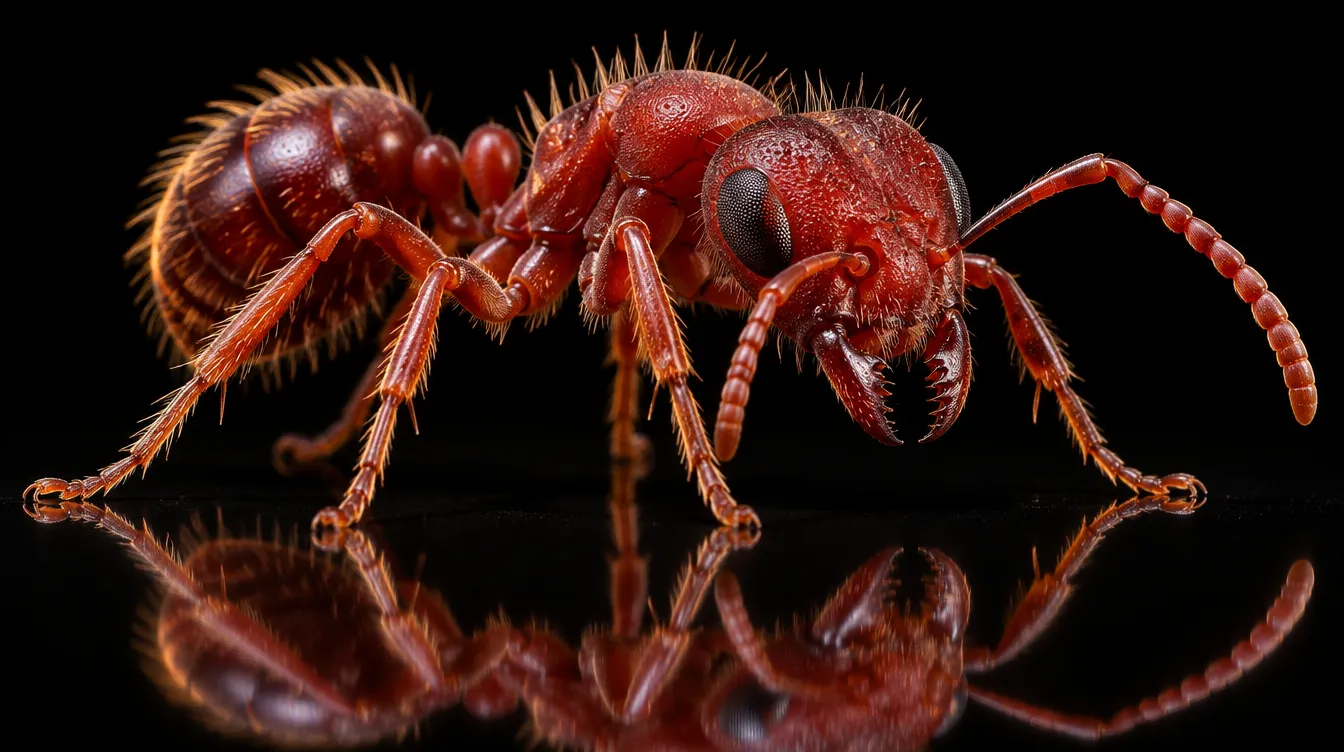
Quick answerAnt control in Scottsdale for desert ants, with colony-focused treatment, perimeter barriers and no contracts. Get a free quote from Studs Against Bugs.
Updated November 18, 2026 · Studs Against Bugs, Scottsdale, AZ · 480-670-4529 Ants are the pest most homeowners try to fix themselves first. A spray under the sink, a line of bait by the door, and for a week or two the problem seems solved. Then the trail comes back, often in a different spot, because the nest in your yard was never touched. Ants are social insects, and the visible line in your kitchen is a tiny part of a colony that may number in the thousands.
Studs Against Bugs provides ant control in Scottsdale that aims at the source. We identify the ants you are dealing with, trace where they are entering and nesting, and treat with professional-grade products built for Arizona heat. There are no contracts, and quotes are free.
Identifying the ants in your Scottsdale home or yard
Different ants behave differently, and the right treatment depends on which ones you have. Desert yards commonly host harvester ants, which build bare, cleared mounds with a hole in the middle and forage in lines across the yard. Small sugar-seeking ants show up in kitchens and bathrooms and form tidy, persistent trails to food and water. Larger carpenter ants, which excavate wood rather than eat it, sometimes appear in damp or damaged structures.
Take a quick note of what you see: the size, the color, where they travel and what they are after. Photos help. A line along a baseboard leading to a crumb is a different situation than a mound at the edge of the driveway, and our inspection step is designed to tell them apart rather than guess.
Why ants flourish in desert neighborhoods
You might expect a dry climate to be hard on ants, but they have it figured out. Irrigation is the major draw. Drip lines, sprinklers, pool decks and shaded plant beds give ants steady moisture in a place that otherwise has very little. Fruit trees, citrus and flowering plants add food, while rock mulch and pavers give them warm, protected nesting spots.
When summer heat peaks, ants tend to look for cooler, moister places, and that often means your home. After a monsoon storm, nests are flooded or disturbed and ants relocate, sometimes straight into walls and garages. In a landscaped community with many irrigated yards close together, ants can move easily between properties, so a single treatment at one house does not always settle the issue for long.
Ants often travel the same routes as other insects, which is why ant control pairs naturally with broader pest control.
How we treat ants with the Tri-Guard process
The goal is to reach the colony, not just the ants you can see.
- Comprehensive property inspection. We trace trails to find entry points like weep screeds and pipe penetrations, and look for nests along foundations, in rock beds and under pavers.
- Custom desert-defense planning. We choose a plan around the species and the layout of your yard, with the safety of your family and pets in mind.
- Targeted strategic treatment. Professional-grade, eco-conscious treatments go on the perimeter and the nesting areas and interior hot spots we identified.
- Ongoing monitoring and prevention. We check results at follow-up visits and adjust as the seasons change and ant activity shifts.
Rather than relying on a single product, we match the approach to the situation, since baits, barriers and direct nest treatments each have their place.
Why bait, barrier and nest treatment all have a place
No single product solves every ant problem. Sweet-feeding ants carry bait back to the nest, so a slow-acting bait placed along their trail can reach the whole colony, as long as it is not disturbed. Perimeter barriers stop ants from coming in from the yard and protect doors, windows and utility penetrations. Direct treatment of a visible mound is often the quickest way to deal with harvester ants in a rock bed or along a driveway edge.
The skill is in choosing the right combination for your yard and applying each one where it counts. That is also why do-it-yourself ant spray so often disappoints: it addresses the visible ants, not the structure of the colony behind them.
What you can do to cut ant traffic at home
You can make your home less attractive in a few practical ways. Wipe up crumbs and sticky spills quickly, store pantry items like sugar, honey and cereal in sealed containers, and rinse recyclables. Do not leave pet food out overnight. Fix leaking faucets and drips under sinks, since water draws ants as much as food does.
Outside, keep tree branches and shrubs trimmed away from the walls, because plants touching the house are ant bridges. Keep mulch and rock a few inches back from the foundation where possible, and check irrigation for leaks. Resist the urge to spray repellent on a trail you see in the house. It can scatter the ants into new routes and make baiting less effective. Instead, take a photo and tell your technician where the line was.
What to expect at your ant service
Your technician will inspect the exterior and the interior spots where ants have been seen, locate trails and nests where possible and apply the treatments we planned. We will explain what we used and where. Within days you may notice activity actually increase briefly as ants come into contact with the products, then fall off as the colony is affected. That pattern is normal, and it is a good reason not to wipe away every ant on sight.
If ants return, tell us right away. Seasonal shifts and neighboring nests can bring new colonies into the yard, and a follow-up visit lets us fine-tune the approach. Our quarterly and bimonthly plans include ants along with other common household pests, so you are covered year-round without a contract. For a customized recommendation, request a free quote.