Quick answerCarpet beetle control in Scottsdale AZ. Protect rugs, wool, and stored items with inspection and a custom plan. No contracts, free quotes.
Updated November 18, 2026 · Studs Against Bugs, Scottsdale, AZ · 480-670-4529 Carpet beetles are the pest that homeowners discover after the damage is done. A small hole in a wool sweater, a bald patch on a rug, thinning fur on a stored throw, a keepsake that has been nibbled: these are the signs. The adults are tiny and harmless-looking, but the larvae feed on natural fibers, and a quiet population can go unnoticed for months.
Many Scottsdale homes contain exactly the kinds of materials carpet beetles like: wool and silk rugs, upholstered furniture, down, feathers, leather, and long-stored seasonal clothing. Studs Against Bugs tracks down where they are living, treats those areas with professional-grade products, and helps you protect the things you value. No contracts and free quotes.
What Carpet Beetles Actually Do
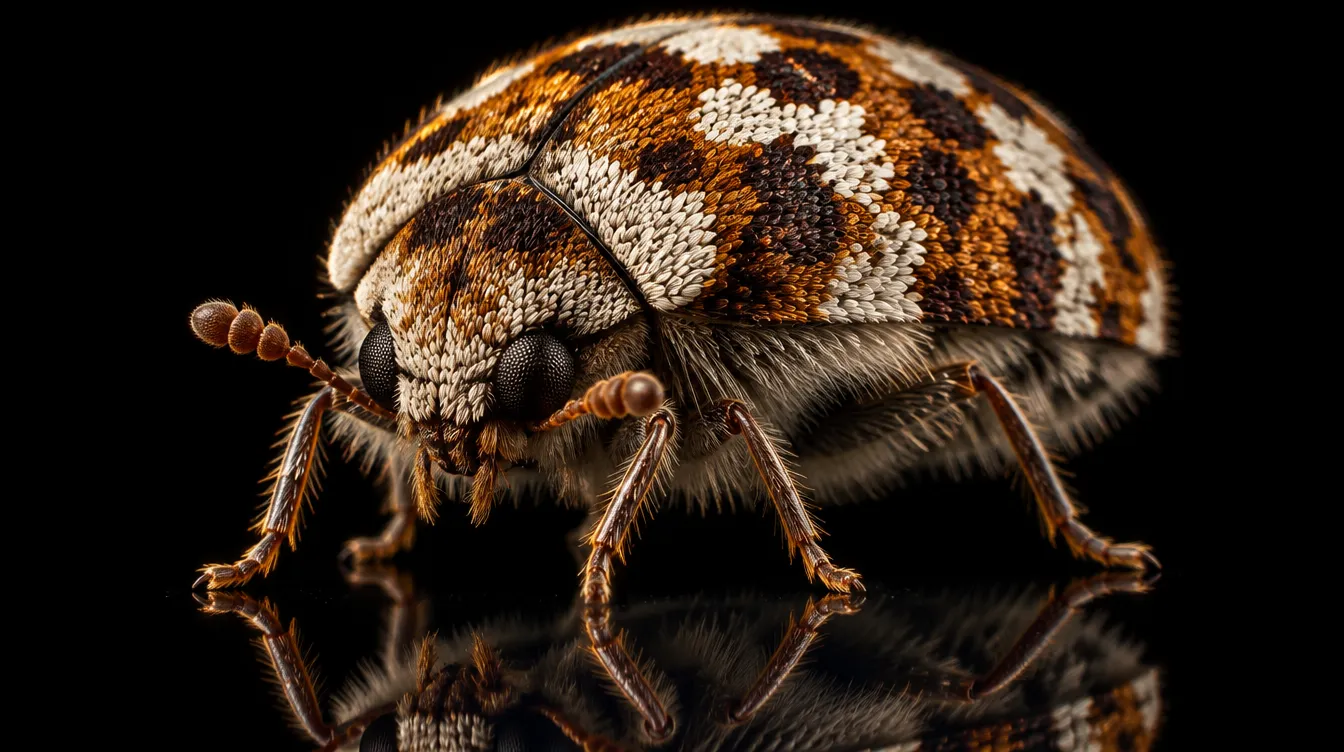
Adult carpet beetles are small, rounded insects, often mottled with black, white and orange or brown scales. They fly to light and often show up on windowsills. They do not chew your belongings. The damage comes from the larvae, which are small, fuzzy or bristly, and tan to brown. They eat keratin, the protein found in wool, silk, fur, feathers and animal-based fibers, plus lint, pet hair and dead insects.
Because larvae hide in dark, undisturbed places and shed their skins as they grow, the first clue may be shed skins rather than the insects themselves.
Where to Look in Your Home
- Along the edges of wall-to-wall carpet and under heavy furniture.
- Inside closets, especially around wool, cashmere, silk and stored clothing.
- Along baseboards, vents and the lint that gathers in them.
- Inside upholstered furniture seams, pillows and down items.
- Pantry shelves, where some larvae feed on dry goods and pet food.
- Near windows, where the adult beetles gather after emerging.
Look for shed larval skins, very small fecal specks, thin patches in fabric and live larvae. Finding adults on windowsills is often the first sign that a population is developing somewhere inside.
Why This Happens in Arizona Homes
Carpet beetles do not need moisture, so a dry climate does not slow them down. Air-conditioned, climate-stable homes let them develop year-round. Adults also come in from outdoors, where they feed on pollen from flowering plants, and then lay eggs inside. Bird nests, rodent nests and old insect nests in attics, wall voids and eaves are another source, because they contain the protein-rich debris larvae love.
That is one reason a thorough exterior inspection, looking at eaves, vents and weep screeds, is part of how we approach carpet beetles.
How Tri-Guard Technology Helps
Through our Tri-Guard process, we begin by inspecting the interior and exterior to find the actual source of the population, not just the insects visible today. We then build a plan tailored to your property, factoring in the safety of your family and pets. Targeted treatment is applied to the infested zones and likely harborage areas, and follow-up monitoring confirms that the population is declining and catches any new arrivals.
If nests of birds or rodents are involved, we will point that out so the underlying source can be handled too. See our bird control page for related deterrence information.
A Quick Guide to Protecting Valuable Items
The items that matter most are often the ones that sit untouched for years: a wool rug from a family trip, a silk scarf collection, heirloom quilts, a mounted trophy, a fur coat, a piano with felt hammers, or a box of old photographs and keepsakes. These are exactly the kinds of materials carpet beetle larvae seek out, because they are rich in protein and rarely disturbed.
If you own pieces like these, build a routine around them. Once or twice a year, take them out, shake and brush them in a well-lit area, and look at the seams, folds and undersides. Clean wool and silk items before storage, because body oils and food stains attract larvae. Store them in airtight containers or garment bags with tight seals, not in open cardboard boxes. Rotate and vacuum rugs, and lift area rugs from time to time to check beneath them and the floor underneath.
For antiques or textiles with real sentimental or financial value, speak with a professional conservator or cleaner about the safest way to treat them. Our job is to deal with the source of the infestation in your home so the pieces you care about stay protected.
It also helps to think about pet hair and lint, which are a hidden food source. Pet hair collects under furniture, behind doors and inside vents, and larvae feed on it long before they find your wool rug. Regular vacuuming of these low-traffic spots removes food, eggs and larvae in one pass. Replace vacuum bags or empty canisters outdoors, and pay special attention to closets that rarely get cleaned. Reducing the available food is one of the quietest and most effective things you can do alongside professional treatment.
Protecting Your Belongings and What to Expect
Your technician will explain what to do before service. In general, vacuum carpets, edges and closets thoroughly, empty the vacuum outside, and launder washable items on the hottest setting the fabric allows. Store valuable wool, silk and fur items in sealed containers once they are clean, and have items you cannot launder professionally cleaned. Avoid leaving soiled clothing in piles, since body oils and food residue attract larvae.
We provide free quotes, with pricing based on your home. Recurring protection fits within our Quarterly and Bimonthly plans. Ready to protect your rugs and keepsakes? Request a quote or call 480-670-4529.