Quick answerBoxelder bug control in Scottsdale. Stop clusters on sunny walls and the fall invasions into your home. Professional plans, no contracts.
Updated November 18, 2026 · Studs Against Bugs, Scottsdale, AZ · 480-670-4529 If you have seen clusters of black and reddish-orange insects massing on a south-facing wall, around a window frame, or on a block wall in the afternoon sun, you have probably met boxelder bugs. They do not bite people, harm pets, or damage the structure of a home. What they do is gather in large numbers and look for a place to wait out the cooler months, and that place can be your house.
Studs Against Bugs helps Scottsdale homeowners keep boxelder bugs on the outside of the walls. We find the host trees and entry points drawing them in, apply professional-grade barrier treatment that holds up in Arizona heat, and monitor as the seasons turn. No contracts, free quotes.
Identifying Boxelder Bugs
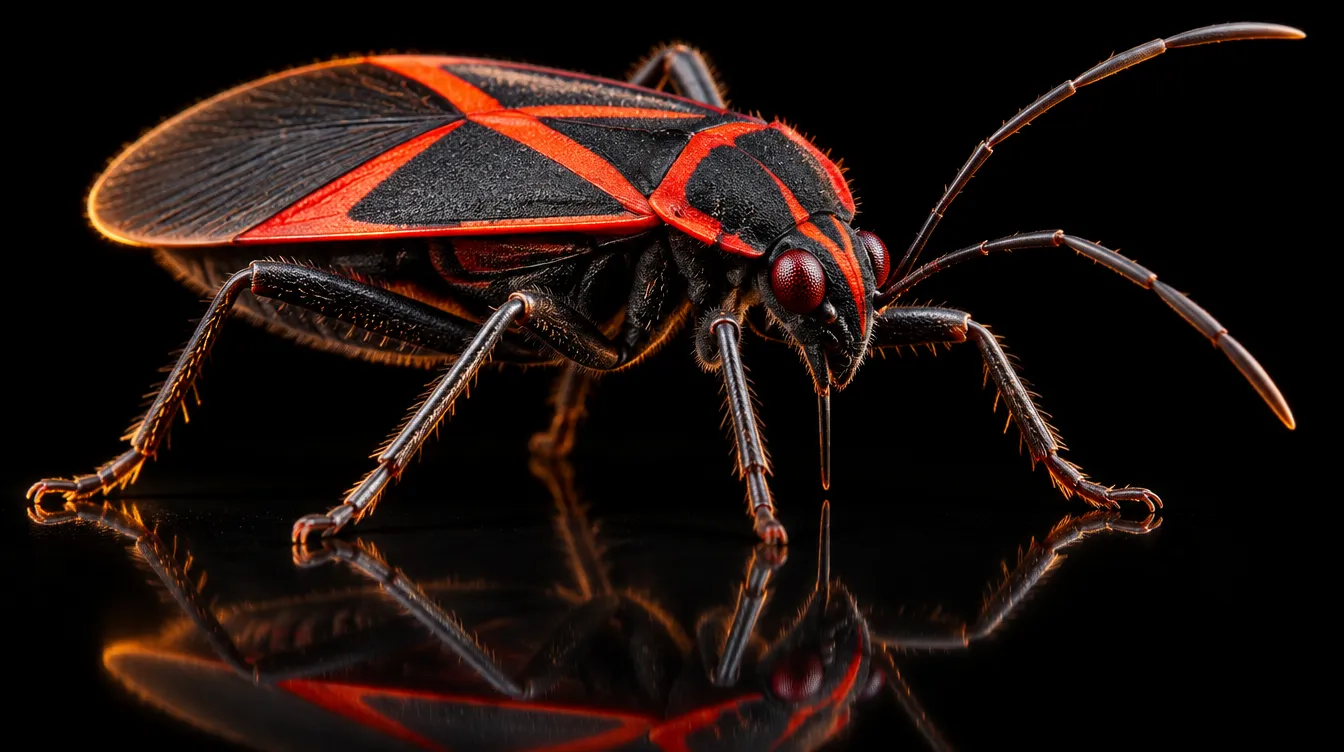
Adult boxelder bugs are about half an inch long, dark gray or black, with reddish-orange markings along the edges of the wings and a V-shaped pattern on the back. Young nymphs are smaller and bright red. They feed on the seeds and leaves of host trees, particularly boxelder and related maples, and sometimes ash trees. They often fly to warm, sunny surfaces and cluster in the sun.
They are sometimes confused with other red and black insects, and with other bugs that invade homes in the fall. A quick identification matters because the best treatment and timing depend on the species. Take a photo and send it with your quote request.
Why They Gather on Desert Homes
Boxelder bugs feed on certain trees, so having host trees on your property or on your street can increase pressure on your home. As temperatures fall, they look for warm, protected places to overwinter, and the sunniest walls are the first stop. Stucco and block walls absorb heat, which draws them in. Once they have gathered, they look for cracks around windows, doors, utility lines, vents and weep screeds, and they can slip through surprisingly small gaps.
Newer neighborhoods with young landscape trees and older communities with mature shade trees can both see activity. Homes near parks, greenbelts and washes tend to see larger numbers.
Signs of an Active Problem
- Clusters of bugs on sunny walls, fences, patio furniture and doorframes.
- Bugs crawling around windows and inside window tracks on warm winter days.
- Bugs emerging inside the house when the heat comes on or on warm afternoons.
- Small reddish-brown stains on curtains or walls where bugs have been crushed.
- Large groups on or under host trees in spring and summer.
Crushing them can leave stains and odor, so vacuuming is the better short-term response.
How Our Four-Step Process Handles Them
Our Tri-Guard Technology begins with an inspection to locate host trees, sunny gathering walls and entry points. Next we design a plan around your home's exposure and landscaping. Targeted treatment places a professional-grade barrier along the perimeter and the areas where bugs gather, timed for when they are most active. Finally, ongoing monitoring tracks seasonal activity, so the barrier is refreshed when pressure rises.
This works best before the big fall gatherings begin, but we can help any time you see a problem.
Timing the Barrier to the Season
Boxelder bugs follow a calendar. Eggs are laid on host trees in spring, nymphs feed and grow through summer, and adults begin searching for winter shelter as the nights cool. In the Phoenix area the wave of gathering often shows up in the fall, but warm winter days can also bring bugs out of hiding, and spring sunshine can wake them and send them wandering indoors.
The most effective time to place a barrier is before the big fall gatherings begin, so that bugs landing on the walls meet a treated surface rather than a gap to crawl through. A late-summer or early-fall visit is a good target. If you are already seeing clusters, treatment can still help, though it is combined with sealing and vacuuming to deal with the ones already inside.
It also helps to keep a simple log of where and when you see them. If the same south-facing wall fills up every October, that tells us where to concentrate. That kind of local knowledge, shared with your technician, makes the barrier sharper and the results more consistent from year to year.
Remember that insects hiding inside wall voids may emerge on warm days, so a few stragglers inside during winter does not mean the barrier failed.
Homeowners sometimes ask whether the bugs are harming their trees. In most cases the feeding is light and not a serious threat to a healthy tree, so the focus stays on keeping bugs out of the house rather than saving the tree. If you have concerns about a particular tree, a landscaper or arborist can advise you. Meanwhile, keep screens in good repair and check the tops of windows and door frames, because that is where small gaps tend to open first.
If you are building or remodeling, ask your contractor about sealing details around windows, soffits and utility penetrations. A tight building envelope is the best long-term defense against any fall invader, and our inspection can point out the spots most worth fixing.
What You Can Do and What to Expect
Seal gaps around windows, doors, vents and utility lines with appropriate caulk or weatherstripping, repair torn screens, and check weep screeds and attic vents. Vacuum indoor bugs rather than crushing them, then empty the vacuum outside. Consider the host trees near your home when planning new landscaping, and talk to your HOA before removing any trees.
At service, your technician treats the exterior and explains what they found. Recurring plans keep the barrier in place, with our Quarterly plan starting at $53 per month and our Bimonthly plan at $99 per service. Free quotes, no contracts. Request yours or call 480-670-4529.