Quick answerFlying ants or termites? Learn the differences in wings, antennae and waist, plus what each means for your Scottsdale home. Free quotes, no contracts.
Updated November 18, 2026 · Studs Against Bugs, Scottsdale, AZ · 480-670-4529 When winged insects appear near a window or door, the first question is whether you have flying ants or termites. It matters, because ants are usually a nuisance while termites feed on the wood and other materials in a home.
Fortunately, the two have clear physical differences if you can look closely. This guide walks through how to tell them apart, what each means, and when to call a professional. If you are sure termites are involved, our termite control page explains the treatment, and for ants see our ant control service.
Three quick checks: waist, antennae, wings
Look closely at a few features and you can usually tell:
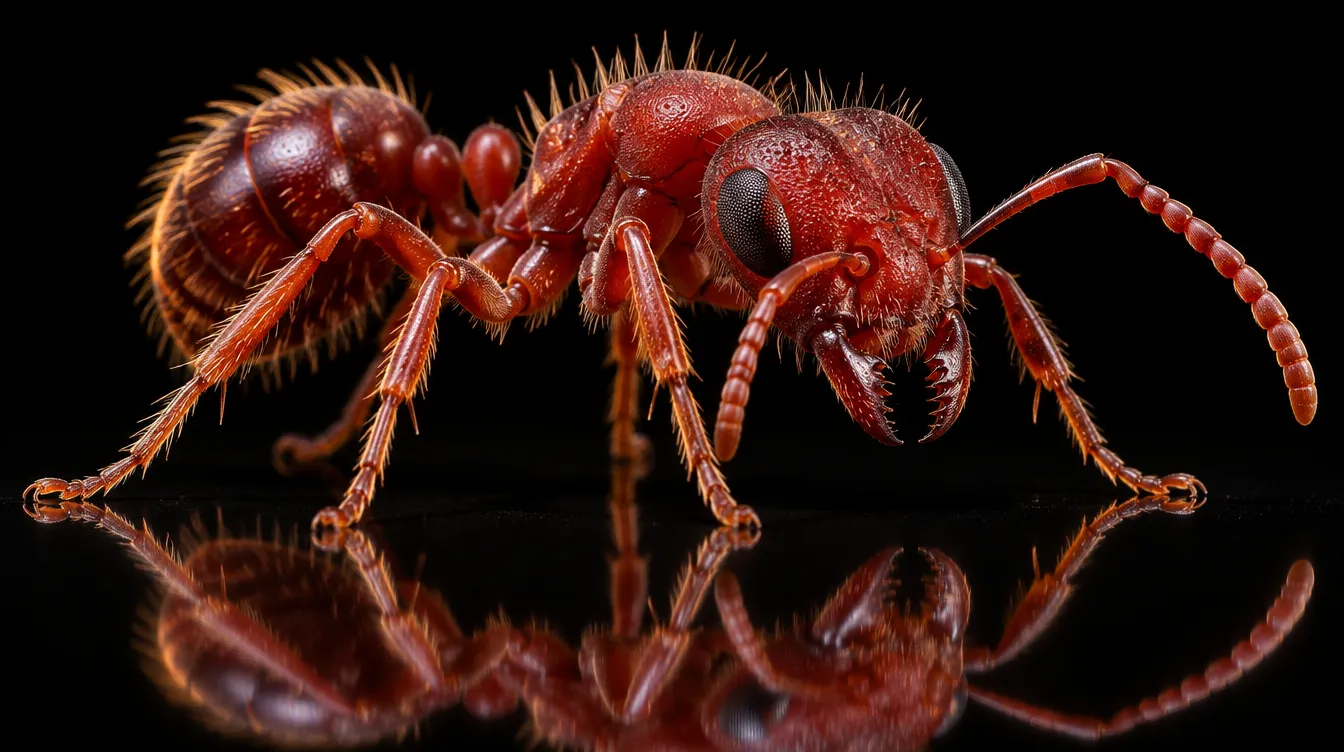
- Waist: ants have a narrow, pinched waist. Termites have a broad, straight body with no obvious pinch.
- Antennae: ants have bent, elbowed antennae. Termite antennae are straight and beaded.
- Wings: both can have two pairs, but ant wings are different sizes, with the front pair larger. Termite wings are nearly equal in length and often longer than the body.
If you can capture one in a clear container or on tape, a magnifying glass or phone camera zoom makes the comparison easy.
Size and color can help but are less reliable. Both ants and termites vary by species, and some termites look pale while others are darker. Rely on the structural features first, and use size and color only as supporting clues. If you can photograph the insect against a white sheet of paper, the details usually show up clearly.
Behavior is another clue
Ants tend to travel in visible trails, searching for food and water, and they often show up in kitchens and bathrooms. Termites stay hidden, building mud tubes and eating wood out of sight. When you see winged termites indoors, they are often swarmers that came out of a nearby colony, sometimes from inside the structure.
Discarded wings near a window or door can point to termites, because swarmers shed theirs after flying. See our termite signs guide for more clues.
Timing can help as well. Termite swarms often occur after rain or on warm days, and they tend to be brief, so the evidence may be a handful of wings instead of the insects themselves. If you find wings in several spots, that suggests a colony is close by and worth investigating.
Common Arizona ants
The Valley has several species of ants, many of them well adapted to desert conditions. Some form large visible mounds in yards and rock beds, some trail into kitchens, and others nest in wall voids. Because each species responds differently to treatment, a correct identification helps. Your technician can tell which type you have and choose the right approach.
Ant pressure often increases when moisture and food sources are available, which is one reason it can shift with the seasons. Our monsoon season guide explores that.
Why the distinction matters
Ants can be bothersome and contaminate food, and certain species can bite or sting. But they do not eat the wood in your home. Termites, on the other hand, feed on wood and other cellulose material, and damage can build up quietly over time.
That difference changes the urgency. Ants call for effective control. Termites call for a prompt professional inspection and, if needed, treatment of the soil and structure rather than a quick surface spray.
Treatment philosophy differs too. Ant control often focuses on the trails, nests, and food sources, while termite control focuses on creating a continuous protective barrier in the soil and around the structure. Because of that, calling the wrong pest by the wrong name can lead to the wrong remedy, which is why identification is the first step.
Carpenter ants and other lookalikes
There are other insects that can be mistaken for termites or ants, including carpenter ants, which excavate wood to nest but do not eat it. Because the damage can look similar, and because the treatment is different, it is wise to have a professional identify the culprit instead of relying on guesswork.
If you are unsure, err on the side of getting it checked. A short inspection that rules out termites gives peace of mind, and one that finds them early can save a lot of trouble. We are happy to look and tell you plainly what we see.
What to do next
Save a sample, take clear photos, and avoid spraying. A store-bought spray might knock down what you see without addressing the colony, and it can make termite activity harder to find. Then call us on 480-670-4529 or request a free quote. If termites are confirmed, our Gold, Platinum, and Diamond options start at $5, $7, and $10 per linear foot, explained on the termite pricing page.
Sometimes the answer will turn out to be neither. Other flying insects, including some beetles and gnats, can be confused with swarmers. A proper look removes the doubt and keeps you from spending money on the wrong fix.