Quick answerMud tubes, swarmers, hollow wood and other subterranean termite signs in Arizona homes. Free quotes, no-contract termite treatment in Scottsdale.
Updated November 18, 2026 · Studs Against Bugs, Scottsdale, AZ · 480-670-4529 Subterranean termites live in the soil and travel to your home through tunnels, feeding on wood and other cellulose material. The trouble is that they do their work quietly, behind walls and under floors, so the first signs are often subtle.
Knowing what to look for is the best low-cost defense. This guide covers the most common signs of subterranean termites in Arizona homes, what is easy to confuse with something harmless, and what to do if you think you have found activity. If anything here looks familiar, a professional termite inspection is the right next step.
Mud tubes on foundations and walls
Mud tubes are the classic giveaway. They are thin, pencil-sized tunnels made of soil and saliva that termites build to travel between the ground and their food while staying protected from dry air. In Arizona you may find them on foundation walls, on stucco, inside garages, or running up a pipe or post.
Break off a small section and check back in a few days. If the tube has been rebuilt, that is a strong sign of active termites. An old, empty tube still deserves attention, but it tells a different story.
Mud tubes can also be hard to see in the places termites favor. Check the inside of the garage, the area around the water heater, crawl spaces if your home has one, and the underside of exterior steps and porches. Stucco can hide tubes that run up behind trim, so look carefully at any spot where a wall meets the slab. Photograph anything suspicious so you can show it to the inspector.
Swarmers and discarded wings
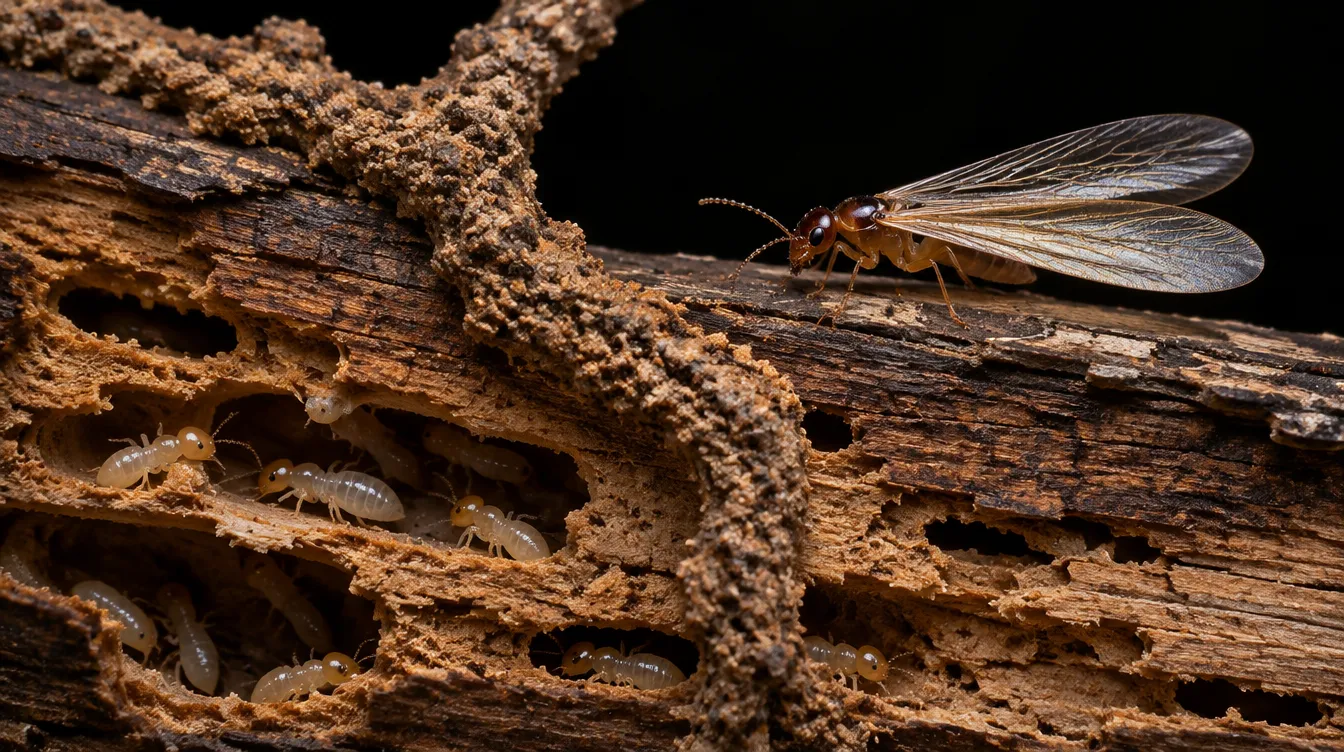
Winged reproductive termites, called swarmers, leave a mature colony to start new ones. You may see a cluster of them near a window, light, or door, or you may only find small piles of translucent wings on sills and floors after they have gone.
Flying ants can look similar at a glance. Termites have a thick waist, straight antennae, and two wings of nearly equal length. If you are unsure which you have, save a few and have them identified. Our guide to ants versus termites in Arizona explains the differences in more detail.
Wood that sounds or looks wrong
Termites usually eat wood from the inside out, which can leave a thin outer layer that looks intact. Tap baseboards, door frames, and exposed beams with a screwdriver handle. A hollow or papery sound is worth investigating. Also watch for:
- Paint or drywall that bubbles, buckles, or looks water-damaged without an obvious leak
- Doors and windows that suddenly stick
- Tiny pinholes or sagging in wood surfaces
- Soft spots in trim near the ground
Moisture problems can cause some of the same symptoms, so a professional can help tell the difference.
It helps to compare against a baseline. If you have photos of your baseboards or door frames from a few years ago, look at them next to the current condition. Subtle changes in paint texture or small ripples near the floor may be easier to notice in comparison. Keep in mind that none of these signs alone proves termites; they are reasons to look more closely.
Frass and other small clues
Drywood termites leave pellet-like droppings, but subterranean termites generally do not push out visible frass the same way. If you see tiny piles of pellets, the pest may be a different species, which changes the treatment approach. Either way, the right move is the same: get an inspection rather than guessing.
Where termites tend to find a way in
Subterranean termites reach a house through contact with soil, and they can slip through very small cracks in slabs, around plumbing penetrations, and through gaps in expansion joints. Wood-to-soil contact, stored lumber against walls, and landscaping that bridges the ground to the structure can all help them.
Our inspection step looks at penetrations, weep screeds, and landscaping bridges for exactly this reason. Termite risk is also not limited to older homes, so newer construction should still be checked.
Landscaping choices can raise or lower the odds. Mulch and soil piled high against the foundation hide the visible edge of the slab and give termites protected access to the structure. Keeping that edge exposed, where practical, lets you and a technician actually see what is going on. Irrigation that soaks the same area every day also creates the kind of moisture some pests prefer.
What to do if you spot a sign
Do not spray the area with a store-bought insecticide. It can scatter the colony and make it harder to find the activity. Take photos, note where you saw it, and call a professional.
If treatment is needed, our approach is a full trench and slab treatment using Termidor HE, with Gold from $5 per linear foot including a 2-year warranty, Platinum from $7 per foot with a 5-year warranty, and Diamond from $10 per foot, which adds Trelona bait stations. You can see how those tiers work on our termite pricing page or in our termite cost guide.
When you call, tell us exactly what you saw and where, and whether you have had any past termite treatment or paperwork. That history helps the technician decide where to look first and what the next step should be.